
Training Plan
Module 01: Introduction to Incident Handling and Response
- Understand Information Security Threats and Attack Vectors
- Explain Various Attack and Defense Frameworks
- Understand Information Security Concepts
- Understand Information Security Incidents
- Understand the Incident Management Process
- Understand Incident Response Automation and Orchestration
- Describe Various Incident Handling and Response Best Practices
- Explain Various Standards Related to Incident Handling and Response
- Explain Various Cyber Security Frameworks
- Understand Incident Handling Laws and Legal Compliance
Module 02: Incident Handling and Response Process
- Understand Incident Handling and Response (IH&R) Process
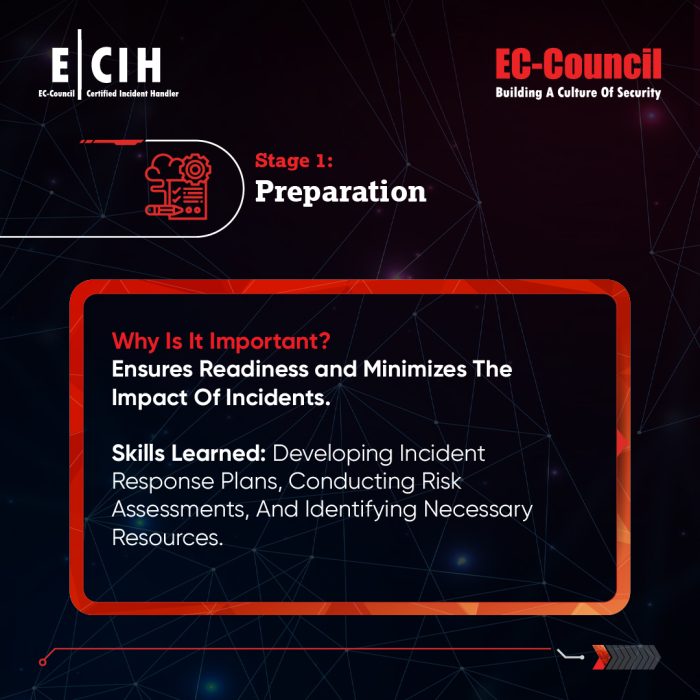
- Explain Preparation Steps for Incident Handling and Response
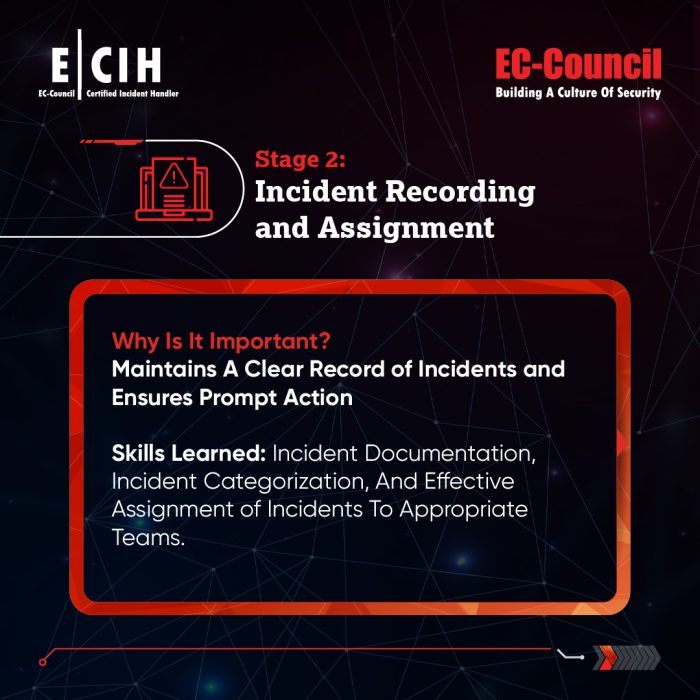
- Understand Incident Recording and Assignment
- Understand Incident Triage
- Explain the Process of Notification
- Understand the Process of Containment
- Describe Evidence Gathering and Forensics Analysis
- Explain the Process of Eradication
- Understand the Process of Recovery
- Describe Various Post-Incident Activities
- Explain the Importance of Information Sharing Activities
Module 03: First Response
- Explain the Concept of First Response
- Understand the Process of Securing and Documenting the Crime Scene
- Understand the Process of Collecting Evidence at the Crime Scene
- Explain the Process for Preserving, Packaging, and Transporting Evidence
Module 04: Handling and Responding to Malware Incidents
- Understand the Handling of Malware Incidents
- Explain Preparation for Handling Malware Incidents
- Understand Detection of Malware Incidents
- Explain Containment of Malware Incidents
- Describe How to Perform Malware Analysis
- Understand Eradication of Malware Incidents
- Explain Recovery after Malware Incidents
- Understand the Handling of Malware Incidents – Case Study
- Describe Best Practices against Malware Incidents
Module 05: Handling and Responding to Email Security Incidents
- Understand Email Security Incidents
- Explain Preparation Steps for Handling Email Security Incidents
- Understand Detection and Containment of Email Security Incidents
- Understand Analysis of Email Security Incidents
- Explain Eradication of Email Security Incidents
- Understand the Process of Recovery after Email Security Incidents
- Understand the Handling of Email Security Incidents -Case Study
- Explain Best Practices against Email Security Incident
Module 06: Handling and Responding to Network Security Incidents
- Understand the Handling of Network Security Incidents
- Prepare to Handle Network Security Incidents
- Understand Detection and Validation of Network Security Incidents
- Understand the Handling of Unauthorized Access Incidents
- Understand the Handling of Inappropriate Usage Incidents
- Understand the Handling of Denial-of-Service Incidents
- Understand the Handling of Wireless Network Security Incidents
- Understand the Handling of Network Security Incidents – Case Study
- Describe Best Practices against Network Security Incidents
Module 07: Handling and Responding to Web Application Security Incidents
- Understand the Handling of Web Application Incidents
- Explain Preparation for Handling Web Application Security Incidents
- Understand Detection and Containment of Web Application Security Incidents
- Explain Analysis of Web Application Security Incidents
- Understand Eradication of Web Application Security Incidents
- Explain Recovery after Web Application Security Incidents
- Understand the Handling of Web Application Security Incidents Case Study
- Describe Best Practices for Securing Web Applications
Module 08: Handling and Responding to Cloud Security Incidents
- Understand the Handling of Cloud Security Incidents
- Explain Various Steps Involved in Handling Cloud Security Incidents
- Understand How to Handle Azure Security Incidents
- Understand How to Handle AWS Security Incidents
- Understand How to Handle Google Cloud Security Incidents
- Understand the Handling of Cloud Security Incidents – Case Study
- Explain Best Practices against Cloud Security Incidents
Module 09: Handling and Responding to Insider Threats
- Understand the Handling of Insider Threats
- Explain Preparation Steps for Handling Insider Threats
- Understand Detection and Containment of Insider Threats
- Explain Analysis of Insider Threats
- Understand Eradication of Insider Threats
- Understand the Process of Recovery after Insider Attacks
- Understand the Handling of Insider Threats – Case Study
- Describe Best Practices against Insider Threats
Module 10: Handling and Responding to Endpoint Security Incidents
- Understand the Handling of Endpoint Security Incidents
- Explain the Handling of Mobile-based Security Incidents
- Explain the Handling of IoT-based Security Incidents
- Explain the Handling of OT-based Security Incidents
- Understand the Handling of Endpoint Security Incidents – Case Study
Course preview
Recommended prerequisite knowledge
- Basic Understanding of Cybersecurity: Participants should have a fundamental knowledge of cybersecurity concepts and practices.
- Networking Knowledge: A basic understanding of networking principles, such as TCP/IP, is recommended.
- Professional Experience: While not mandatory, prior experience in IT or information security is beneficial for participants.
- Certifications: Although not always required, certifications like Certified Ethical Hacker (CEH) or CompTIA Security+ can be advantageous.
Credentials and certification
Exam features
- Code: 212-89
- Title: EC-Council Certified Incident Handler
- Duration: 3 hours
- Number of Questions: 100
- Question Format: Multiple Choice
- Online with EC-Council Exam Center
- Cost: $0 (included in your training)
EC-Council Career Advancement Pathway
Eccentrix offers a structured EC-Council certification pathway to help you specialize in Security Operations Center (SOC) roles. Here’s how each certification fits into this pathway and how to plan your complete progression.
Recommended EC-Council Security Operations Center (SOC) Pathway
- 📚 Level 1 – Foundations – Recommended foundation
Certified Cybersecurity Technician (CCT) – Cybersecurity fundamentals, tools, and SOC operations - 🔍 Level 2 – Analysis & Response – Next step
Certified Security Analyst (CSA) – Incident analysis, investigation, and advanced response - 🚨 Level 3 – Incident Handling – You are here
EC-Council Certified Incident Handler (ECIH) – Proactive and reactive incident management - 🕵️♂️ Level 4 – Threat Intelligence – Expert Achievement
Certified Threat Intelligence Analyst (CTIA) – Collection, analysis, and application of threat intelligence
Duration and Salary Progression by Level
| Level | Certification | Duration | Average Salary (CAD) |
|---|---|---|---|
|
1 |
Certified Cybersecurity Technician |
5 days |
$55,000 – $70,000 |
|
2 |
Certified Security Analyst |
3 days |
$65,000 – $80,000 |
|
3 |
EC-Council Certified Incident Handler |
2 days |
$75,000 – $90,000 |
|
4 |
Certified Threat Intelligence Analyst |
3 days |
$80,000 – $100,000 |
- Total pathway duration: 12–24 months
- Potential salary increase: +20% to +45% from Level 1 to Level 4
Skills Development by Level
| Skill Area | CCT | CSA | ECIH | CTIA |
|---|---|---|---|---|
|
SOC Monitoring |
Introduction |
Proficient |
Advanced |
Advanced |
|
Incident Analysis |
Basic |
Proficient |
Advanced |
Advanced |
|
Incident Response |
Basic |
Advanced |
Expert |
Advanced |
|
Forensic Investigation |
Introduction |
Proficient |
Advanced |
Advanced |
|
Threat Intelligence |
Basic |
Basic |
Proficient |
Expert |
|
SOC Tool Proficiency |
Basic |
Proficient |
Advanced |
Advanced |
Level 3 – Incident Handling with ECIH (Advanced Progression – Your Current Step)
Why this is your logical starting point:
The EC-Council Certified Incident Handler (ECIH) certification allows you to master proactive and reactive security incident management. You will develop advanced skills in incident investigation, coordination with response teams, and implementing strategies to minimize the impact of cyberattacks. This step positions you as a key player in protecting your organization against evolving threats.
Roles accessible after ECIH:
- Security Incident Manager
- Senior SOC Analyst
- Incident Response Consultant
- Digital Forensics Expert
Average salary in Canada: $75,000 – $90,000 CAD
Estimated training duration: 3–6 months
Level 4 – Threat Intelligence with CTIA (Expert Achievement)
CTIA represents the highest expertise in collecting, analyzing, and leveraging threat intelligence. This certification prepares you to anticipate and prevent sophisticated attacks.
Back to Level 1 – Foundations with CCT
If you have not yet completed the Certified Cybersecurity Technician (CCT) certification, start by acquiring the essential foundations in SOC operations, tools, and procedures. This step is recommended before progressing to advanced analysis and incident management.
Back to Level 2 – Analysis & Response with CSA
If you have not yet completed the Certified Security Analyst (CSA) certification, it is recommended to return to this step to deepen your skills in incident analysis, investigation, and advanced response within a SOC environment. This foundation is essential before progressing to proactive incident management.
Other Available EC-Council Pathways
After completing the Security Operations Center (SOC) pathway, you can also explore other specialized tracks or complementary certifications:
Ethical Hacking Technical Pathway
- Certified Ethical Hacker (CEH)
- Certified Network Defender (CND)
- Certified Penetration Testing Professional (CPENT)
Leadership Pathway
Cybercrime Investigation Pathway
AI Pathway (ADG) – Adopt, Test & Govern
- Artificial Intelligence Essentials (AIE)
- Certified AI Program Manager (CAIPM)
- Certified Offensive AI Security Professional (COASP)
- Certified Responsible AI Governance & Ethics (CRAGE)
- Certified Chief Information Security Officer (CCISO)
Complementary Certifications
Benefits of the Complete Pathway
Structured Progression
Each certification builds on the previous one to develop comprehensive SOC expertise.
Global Recognition
Certifications recognized by industry employers worldwide.
Increased Versatility
Prepares you for diverse roles in SOC operations, investigation, intelligence, and incident management.
Rapid Career Advancement
Move quickly from technician to advanced cybersecurity analyst.
Ready to Advance?
Eccentrix Corner Articles: EC-Council Certified Incident Handler (ECIHv3) EC-6159 Resources
Explore our technical articles on EC-Council Certified Incident Handler (ECIHv3) EC-6159 published on Eccentrix Corner. These resources dive deeper into key concepts of proactive and reactive incident management, share best practices in incident response, and provide practical guides to maximize your learning and certification success. Our experts share real-world insights to help you master effective incident handling strategies in professional environments.




ECIH Incident Handler Training
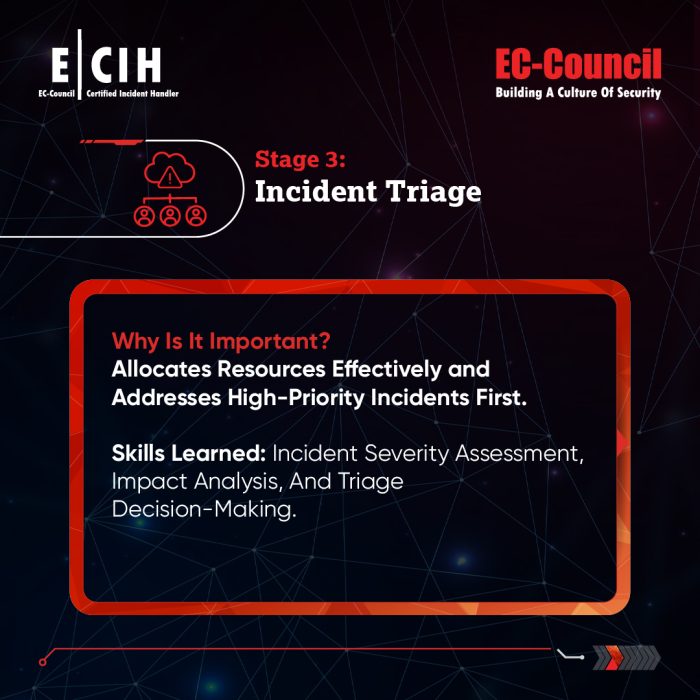
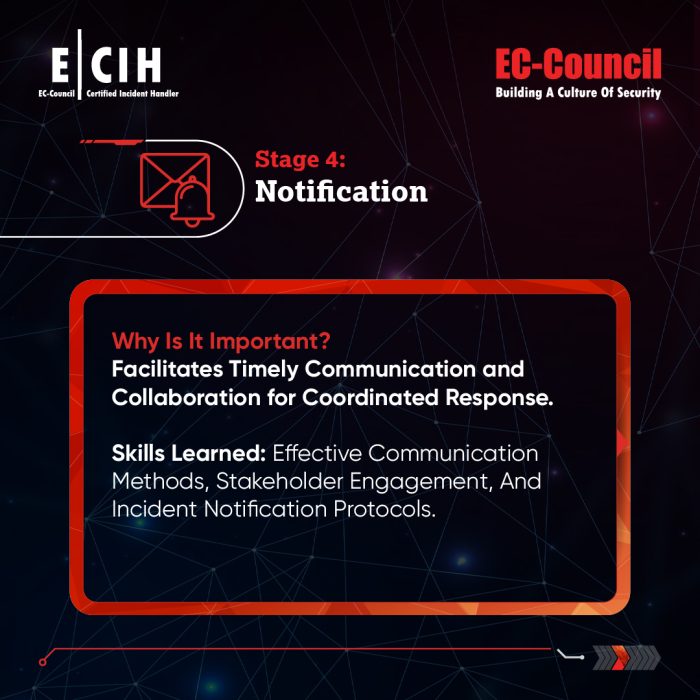
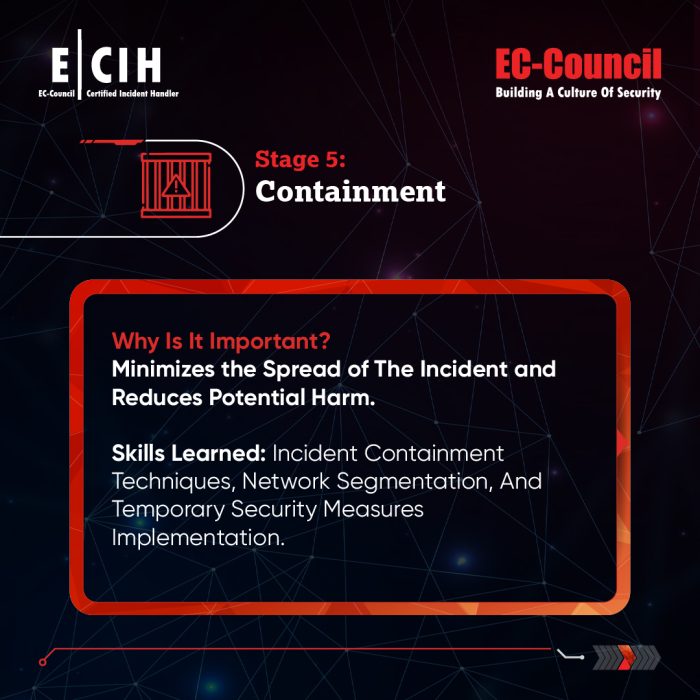
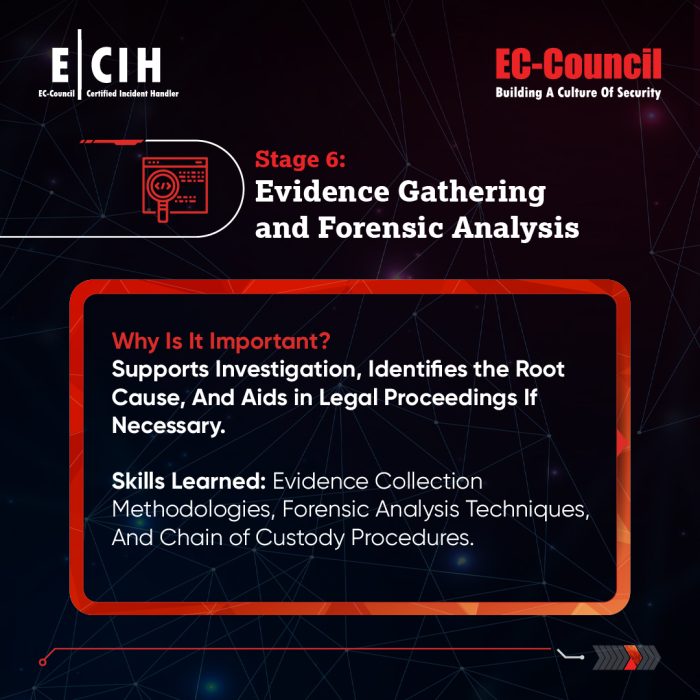
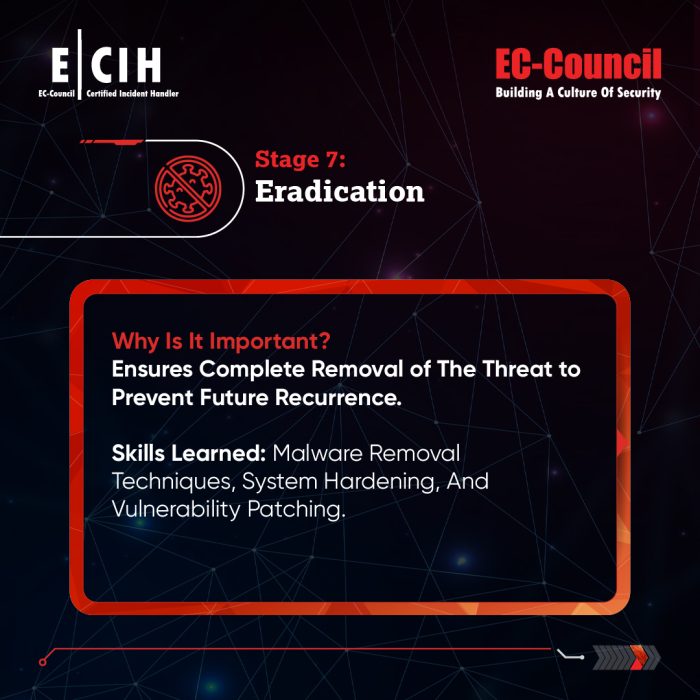
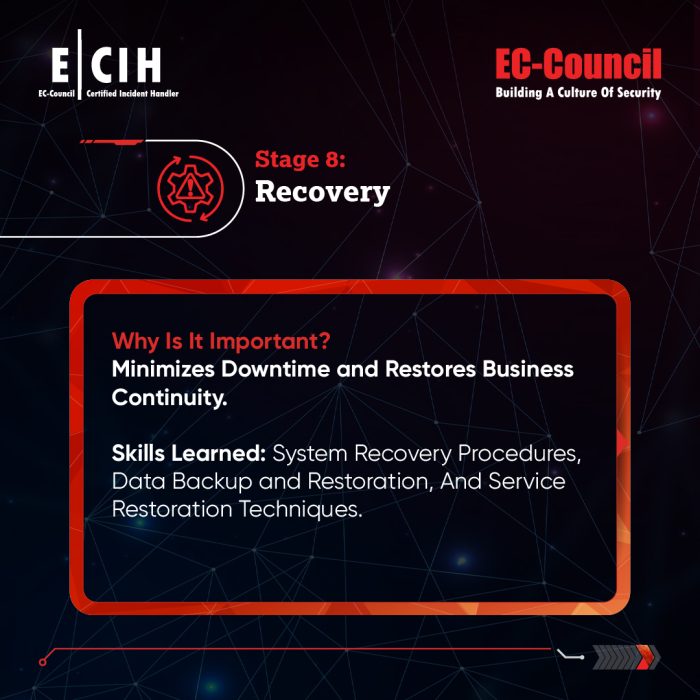
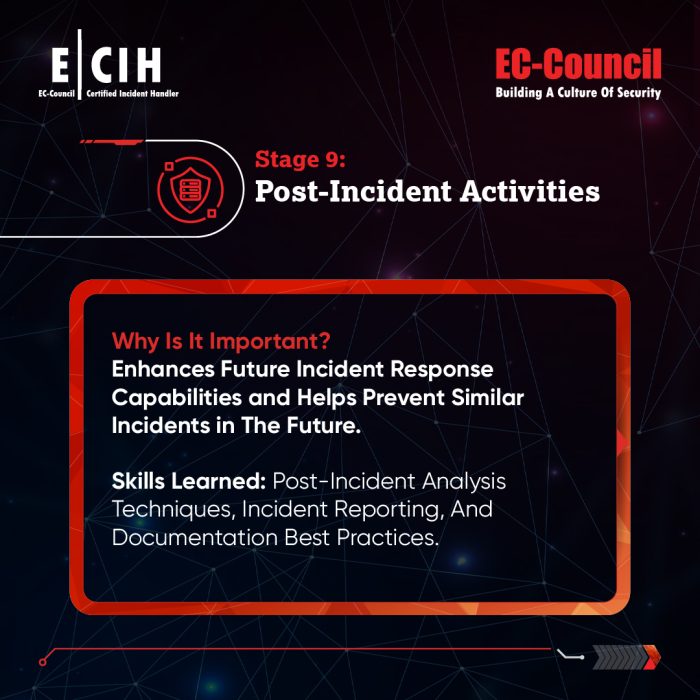
The ECIH Incident Handler training provides IT and cybersecurity professionals with the skills to effectively manage and mitigate security incidents. This course focuses on building the expertise required to respond to cyber threats, minimize risks, and ensure operational resilience for organizations.
Participants will learn industry-standard methodologies and hands-on techniques to handle incidents efficiently. Completing this training prepares individuals for the ECIH certification, demonstrating their ability to respond proactively to cybersecurity challenges.
Why Choose the ECIHv3 Training?
In an era of increasing cyber threats, organizations need skilled professionals to respond effectively to incidents. The ECIHv3 training equips participants to identify, contain, and mitigate security breaches, ensuring minimal impact on business operations.
Earning the ECIH certification showcases your ability to implement robust incident response strategies, making you a key asset in cybersecurity teams.
Key Skills Developed in the Training
Comprehensive incident management
Learn to handle the complete lifecycle of an incident, from detection to recovery.Risk assessment and mitigation
Understand how to evaluate risks and implement measures to minimize future vulnerabilities.Incident detection and analysis
Develop expertise in identifying indicators of compromise and analyzing threats.Effective communication during crises
Master the skills to collaborate with stakeholders and ensure transparent communication during incidents.Compliance and reporting
Learn to adhere to regulatory requirements and produce comprehensive incident reports.Prepare for the ECIH certification exam
Gain the knowledge and practical skills necessary to succeed in the ECIH certification exam.
Hands-On Training with Real-World Scenarios
This course is delivered by certified instructors with extensive experience in incident handling and cybersecurity. Through practical labs, case studies, and simulations, participants gain hands-on experience in managing diverse types of security incidents.
Who Should Attend?
This training is ideal for:
- Incident response team members looking to enhance their skills
- IT managers and professionals tasked with security incident management
- Cybersecurity consultants specializing in threat mitigation
- Individuals preparing for the EC-Council Certified Incident Handler (ECIHv3) certification
Enhance Your Cybersecurity Expertise with ECIHv3 Certification
The EC-Council Certified Incident Handler (ECIHv3) (EC6159) training provides the knowledge and skills needed to tackle cybersecurity incidents effectively. Enroll today to earn a globally recognized certification and strengthen your role in managing organizational security.
Exam Success Strategies for ECIH v3
ECIH v3 Exam Statistics & Success Rates
- Average Pass Rate: 68-73% on first attempt
- Most Common Score Range: 70-78% for passing candidates
- Average Study Time: 5-7 weeks for experienced cybersecurity professionals
- Retake Rate: 22-27% of candidates require a second attempt
- Top Failure Areas: Incident response process and forensic procedures (32%), malware incident handling (26%), cloud security incident response (23%)
Study Method Comparison
| Study Approach | Duration | Pass rate | Best For |
|---|---|---|---|
|
Hands-on Practice Only |
7-9 weeks |
40-50% |
Experienced incident responders |
|
Documentation + Practice |
9-11 weeks |
68-73% |
Methodical learners |
|
Training + Labs + Practice |
5-7 weeks |
85-92% |
Comprehensive preparation |
|
Practice Tests Only |
2-3 weeks |
30-40% |
Not recommended |
Strategic Study Approach
- Create a 5-7 week study schedule – Don’t rush this certification; incident handling requires deep understanding of response workflows and forensic procedures
- Follow the 70-20-10 rule – 70% hands-on practice with incident response scenarios and forensic tools, 20% reading documentation and course materials, 10% practice exams
- Focus on scenario-based learning – ECIH emphasizes real-world incident handling rather than memorizing facts
- Study in 90-minute blocks with 15-minute breaks to maximize retention and avoid burnout
- Practice the complete incident response lifecycle repeatedly – understand preparation, detection, containment, eradication, recovery, and lessons learned
- Master incident-specific response procedures – know how to handle malware, email, network, web application, cloud, insider threat, and endpoint incidents
- Understand forensic evidence collection and preservation – know how to maintain chain of custody and collect digital evidence properly
Common Exam Pitfalls to Avoid
- Don’t confuse general security monitoring with incident response – ECIH requires in-depth knowledge of structured incident handling processes
- The incident response process is heavily tested – understand all phases: preparation, identification, containment, eradication, recovery, and post-incident activities
- First response procedures are critical – know how to secure the scene, preserve evidence, and establish initial containment
- Malware incident handling requires technical depth – understand malware analysis, containment strategies, and eradication techniques
- Email security incidents have unique characteristics – know how to handle phishing, business email compromise, and email-borne malware
- Network security incident response differs from endpoint response – understand network-based containment, isolation, and forensic collection
- Web application incident handling requires specialized knowledge – know how to respond to injection attacks, authentication bypasses, and data breaches
- Cloud security incidents have unique considerations – understand shared responsibility, cloud-native tools, and multi-tenant environments
- Insider threat response requires sensitivity – know how to balance investigation with legal and HR considerations
- Endpoint security incident handling is comprehensive – understand ransomware, advanced persistent threats, and endpoint forensics
Topic Weight Distribution
| Exam Domain | Weight | Focus Areas | Priority |
|---|---|---|---|
|
Introduction to Incident Handling and Response |
8-10% |
IH&R fundamentals, roles, responsibilities, frameworks |
High |
|
Incident Handling and Response Process |
15-18% |
Preparation, detection, containment, eradication, recovery, lessons learned |
Critical |
|
First Response |
10-12% |
Scene security, evidence preservation, initial containment, documentation |
Critical |
|
Handling and Responding to Malware Incidents |
12-15% |
Malware analysis, containment, eradication, system restoration |
Critical |
|
Handling and Responding to Email Security Incidents |
10-12% |
Phishing, BEC, email-borne malware, email forensics |
High |
|
Handling and Responding to Network Security Incidents |
12-15% |
Network intrusions, DDoS, man-in-the-middle, network forensics |
Critical |
|
Handling and Responding to Web Application Security Incidents |
8-10% |
Injection attacks, authentication bypasses, data breaches |
High |
|
Handling and Responding to Cloud Security Incidents |
8-10% |
Cloud-native threats, shared responsibility, cloud forensics |
High |
|
Handling and Responding to Insider Threats |
6-8% |
Insider detection, investigation, legal considerations |
Medium |
|
Handling and Responding to Endpoint Security Incidents |
10-12% |
Ransomware, APTs, endpoint forensics, system recovery |
High |
Exam Day Time Management
- Allocate approximately 1.5 minutes per question on average – this gives you buffer time for complex scenario-based questions
- Read scenario questions completely before attempting to answer – don’t miss critical details about incident context or response priorities
- Flag uncertain questions and return to them – don’t get stuck on difficult items and waste valuable time
- Reserve 10-15 minutes at the end to review flagged questions and double-check your answers
- Manage incident-specific questions strategically – prioritize questions related to your strongest incident types first
Managing Exam Stress & Performance
- Get 7-8 hours of quality sleep the night before – avoid last-minute cramming that reduces cognitive performance
- Log in to the exam site 5-10 minutes early – settle in and complete check-in procedures calmly
- Use deep breathing techniques if you feel overwhelmed during the exam – mental clarity is key for complex questions
- Trust your preparation – your first instinct is usually correct on scenario-based incident response questions
- Remember that the passing score is 70% – you don’t need perfection, just solid competence in incident handling
Technical Preparation Tips
- Practice the complete incident response lifecycle – understand all phases from preparation through post-incident review
- Master forensic evidence collection – know how to preserve chain of custody, collect volatile data, and document findings
- Understand incident-specific response procedures – know how to handle malware, email, network, web app, cloud, insider, and endpoint incidents
- Practice with incident response tools – understand forensic suites, malware analysis tools, network capture utilities, and SIEM platforms
- Master containment strategies – know when to isolate, quarantine, or shut down affected systems
- Understand eradication techniques – know how to remove malware, close vulnerabilities, and restore systems securely
- Practice incident documentation – understand how to create timelines, document actions, and produce incident reports
Final Week Preparation
- Take 2-3 full practice exams to identify knowledge gaps and build confidence
- Review the official ECIH exam objectives from EC-Council one final time
- Focus on your weakest areas – incident response process, malware handling, and cloud incident response are the most common failure areas
- Avoid learning new concepts – focus on reinforcing what you already know
- Prepare your exam day logistics – required identification, computer setup
Mental Preparation Strategies
- Visualize success scenarios – imagine yourself confidently answering questions and solving incident response challenges
- Recall your hands-on experience – you’ve likely solved many of these problems in lab environments before
- Stay positive when facing difficult questions – all candidates encounter challenging scenarios
- Remember that incident handling is a practical skill – your lab experience is your greatest asset
- Approach the exam as a validation of your expertise, not a test of memorized facts
How to Schedule Your ECIH v3 Exam
- Testing is done online with EC-Council Exam Center, the authorized testing partner for ECIH
- Scheduling Process: Create an account, search for “ECIH” or “212-89”, select your date
- Exam Cost: Included in your Eccentrix training – exam voucher provided for this certification
- Scheduling Timeline: Book at least 1-2 weeks in advance for better time slot availability
- Rescheduling Policy: Free rescheduling up to 24 hours before your exam appointment
- Required ID: Government-issued photo ID (passport, driver’s license) matching your registration name exactly
Success Mindset: Approach ECIH as a validation of your incident handling expertise and your ability to respond effectively to diverse security incidents, not as a test of memorized facts. Your hands-on experience with incident response workflows, forensic procedures, and containment strategies is your greatest asset.
Frequently asked questions
What are the prerequisites for the ECIHv3 training?
Basic knowledge of IT systems and cybersecurity principles is recommended.
What topics are covered in the course?
The course covers incident handling processes, risk assessment, containment strategies, and compliance.
Does the training include practical exercises?
Yes, participants will engage in hands-on labs to apply their skills to real-world scenarios.
What tools and techniques are introduced during the training?
Participants learn to use incident response frameworks and tools for threat detection and mitigation.
How does the ECIH certification benefit my career?
The certification validates your incident response expertise, improving your career prospects in cybersecurity roles.
Is the training aligned with the ECIH certification exam?
Yes, the course content is fully aligned with the objectives and requirements of the ECIHv3 certification exam.