
Defend against cyberthreats with Microsoft's security operations platform (SC-200T00)
Training plan
Module 1: Mitigate threats using Microsoft Defender XDR
- Introduction to Microsoft Defender XDR threat protection
- Mitigate incidents using Microsoft Defender
- Remediate risks with Microsoft Defender for Office 365
- Manage Microsoft Entra Identity Protection
- Safeguard your environment with Microsoft Defender for Identity
- Secure your cloud apps and services with Microsoft Defender for Cloud Apps
Module 2: Mitigate threats using Microsoft Security Copilot
- Introduction to generative AI concepts
- Describe Microsoft Security Copilot
- Describe the core features of Microsoft Security Copilot
- Describe the embedded experiences of Microsoft Security Copilot
- Explore use cases of Microsoft Security Copilot
Module 3: Mitigate threats using Microsoft Purview
- Investigate and respond to Microsoft Purview Data Loss Prevention alerts
- Investigate insider risk alerts and related activity
- Search and investigate with Microsoft Purview Audit
- Investigate threats with Content search in Microsoft Purview
Module 4: Mitigate threats using Microsoft Defender for Endpoint
- Protect against threats with Microsoft Defender for Endpoint
- Deploy the Microsoft Defender for Endpoint environment
- Implement Windows security enhancements with Microsoft Defender for Endpoint
- Perform device investigations in Microsoft Defender for Endpoint
- Perform actions on a device using Microsoft Defender for Endpoint
- Perform evidence and entities investigations using Microsoft Defender for Endpoint
- Configure and manage automation using Microsoft Defender for Endpoint
- Configure for alerts and detections in Microsoft Defender for Endpoint
- Utilize Vulnerability Management in Microsoft Defender for Endpoint
Module 5: Mitigate threats using Microsoft Defender for Cloud
- Plan for cloud workload protections using Microsoft Defender for Cloud
- Connect Azure assets to Microsoft Defender for Cloud
- Connect non-Azure resources to Microsoft Defender for Cloud
- Manage your cloud security posture management
- Explain cloud workload protections in Microsoft Defender for Cloud
- Remediate security alerts using Microsoft Defender for Cloud
Module 6: Create queries for Microsoft Sentinel using Kusto Query Language (KQL)
- Construct KQL statements for Microsoft Sentinel
- Analyze query results using KQL
- Build multi-table statements using KQL
- Work with data in Microsoft Sentinel using Kusto Query Language
Module 7: Configure your Microsoft Sentinel environment
- Introduction to Microsoft Sentinel
- Create and manage Microsoft Sentinel workspaces
- Query logs in Microsoft Sentinel
- Use watchlists in Microsoft Sentinel
- Utilize threat intelligence in Microsoft Sentinel
- Integrate Microsoft Defender XDR with Microsoft Sentinel
Module 8: Connect logs to Microsoft Sentinel
- Connect data to Microsoft Sentinel using data connectors
- Connect Microsoft services to Microsoft Sentinel
- Connect Microsoft Defender XDR to Microsoft Sentinel
- Connect Windows hosts to Microsoft Sentinel
- Connect Common Event Format logs to Microsoft Sentinel
- Connect syslog data sources to Microsoft Sentinel
- Connect threat indicators to Microsoft Sentinel
Module 9: Create detections and perform investigations using Microsoft Sentinel
- Threat detection with Microsoft Sentinel analytics
- Automation in Microsoft Sentinel
- Threat response with Microsoft Sentinel playbooks
- Security incident management in Microsoft Sentinel
- Identify threats with Behavioral Analytics
- Data normalization in Microsoft Sentinel
- Query, visualize, and monitor data in Microsoft Sentinel
- Manage content in Microsoft Sentinel
Module 10: Perform threat hunting in Microsoft Sentinel
- Explain threat hunting concepts in Microsoft Sentinel
- Threat hunting with Microsoft Sentinel
- Use Search jobs in Microsoft Sentinel
- Hunt for threats using notebooks in Microsoft Sentinel
Course previews
Recommended prerequisite knowledge
- Basic understanding of Microsoft 365
- Fundamental understanding of Microsoft security, compliance, and identity products
- Intermediate understanding of Windows 10
- Familiarity with Azure services, specifically Azure SQL Database and Azure Storage
- Familiarity with Azure virtual machines and virtual networking
- Basic understanding of scripting concepts.
Credentials and certification
Exam features
- Code: SC-200
- Title: Microsoft Security Operations Analyst
- Duration: 150 minutes
- Number of Questions: 40 to 60
- Question Format: Multiple choice, multiple response, scenario-based
- Passing Score: 700 out of 1000
- Cost: $0 (included in your training)
Exam topics
- Mitigate threats by using Microsoft 365 Defender
- Mitigate threats by using Defender for Cloud
- Mitigate threats by using Microsoft Sentinel
Career Advancement Pathway
Advance to Expert-Level certification
Completing your SC-200 (Microsoft Certified: Security Operations Analyst Associate) certification opens the door to a prestigious Expert-level credential. This Associate certification serves as a foundation for advanced Cloud Security Architecture roles.
Next Step: Cybersecurity Architect Expert
Your SC-200 certification qualifies you to pursue the Microsoft Certified: Cybersecurity Architect Expert certification by completing the SC-100 (Cybersecurity Architect) course. This expert-level credential validates comprehensive skills in designing and evaluating cybersecurity strategies across Zero Trust, GRC, SecOps, data, and applications.
Expert certification path
- ✅ SC-200 (Security Operations Analyst Associate) – You’re here
- ➡️ SC-100 (Cybersecurity Architect) – Next step
- 🎯 Microsoft Certified: Cybersecurity Architect Expert – Expert achievement
Alternative pathways available
The Microsoft Certified: Cybersecurity Architect Expert certification recognizes multiple Associate-level foundations. If you hold certifications in related areas, you can also advance through alternative paths:
Why pursue Expert certification?
Career Benefits:
- Higher salary potential and advanced cybersecurity job opportunities
- Recognition as a senior cybersecurity architect professional
- Comprehensive expertise across enterprise security frameworks
- Leadership roles in enterprise security implementations and strategy
Technical Advancement:
- Deep knowledge of Zero Trust architecture design and implementation
- Advanced threat modeling and security risk assessment capabilities
- Complex multi-cloud security strategy development
- Enterprise-scale governance, risk, and compliance (GRC) management
Ready to advance?
Explore the Cybersecurity Architect Expert certification path and take the next step in your Cloud security career journey.
Eccentrix Corner Articles: Security Operations Analyst Associate SC-200 Resources
Explore our technical articles on Security Operations Analyst Associate SC-200 published on Eccentrix Corner. These resources dive deeper into key concepts, share best practices, and provide practical guides to maximize your learning and certification success. Our experts share real-world insights to help you master security operations analysis with Microsoft.











Microsoft Certified: Security Operations Analyst Associate (SC-200) Training
The Microsoft Certified: Security Operations Analyst Associate (SC-200) training equips professionals with the knowledge and skills required to implement, manage, and monitor security solutions within an organization. This course focuses on using Microsoft technologies such as Azure Security Center, Microsoft Defender, and Microsoft Sentinel to detect, analyze, and respond to security threats effectively.
Ideal for security analysts, IT professionals, and SOC team members, this training prepares participants to earn the SC-200 certification and excel in managing security operations in hybrid and cloud environments.
Why Choose the Security Operations Analyst Training?
As cyber threats become more sophisticated, organizations require skilled security operations analysts to protect their systems and data. The SC-200 certification demonstrates your ability to use Microsoft security solutions to proactively detect and respond to threats. This training enables you to manage complex security environments, reduce vulnerabilities, and enhance organizational resilience.
By mastering tools like Microsoft Sentinel and Defender, you’ll play a critical role in safeguarding your organization’s digital assets.
Key Skills Developed in the Training
Detect and investigate security incidents
Learn to use Microsoft Sentinel for monitoring and analyzing security data from various sources.Manage and configure Microsoft Defender
Protect endpoints, identities, and applications by configuring Defender solutions for real-time threat detection.Analyze and mitigate threats
Use Azure Security Center to identify vulnerabilities and implement remediation strategies.Implement security operations best practices
Gain expertise in SOC operations, incident handling, and threat intelligence.Automate threat response
Leverage playbooks and automation in Microsoft Sentinel to streamline incident response processes.Ensure compliance and reporting
Utilize Microsoft security tools to meet compliance requirements and generate detailed reports for stakeholders.
Interactive, Instructor-Led Training
This training is delivered by Microsoft-certified instructors who bring real-world expertise and hands-on scenarios to the classroom. Participants engage in interactive exercises, ensuring they can apply their knowledge immediately and prepare for the SC-200 certification exam.
Laboratory environment (overview)
You will practice in a structured lab environment with guided steps to validate your progress throughout the exercises. Depending on the lab, it is usually possible to save your progress and resume the steps later, making it easier to practice between sessions.
To ensure a complete experience, a Microsoft 365/Azure tenant environment may be provided to access the features required for the course scenarios (depending on the module requirements and lab conditions).
After the training, access to the lab remains available for a defined period. Tenant access may be time-limited, while access to the virtual machines and guided steps remains available for up to 180 days.
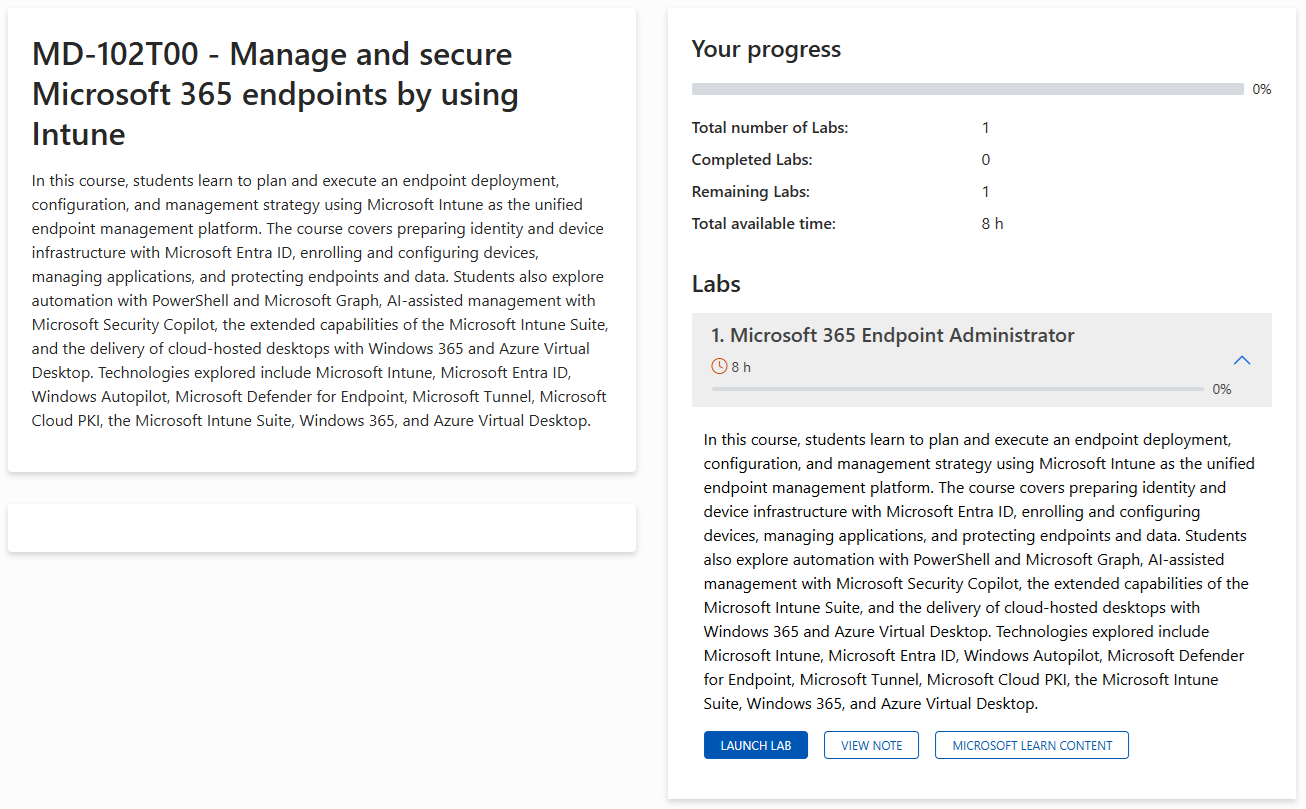
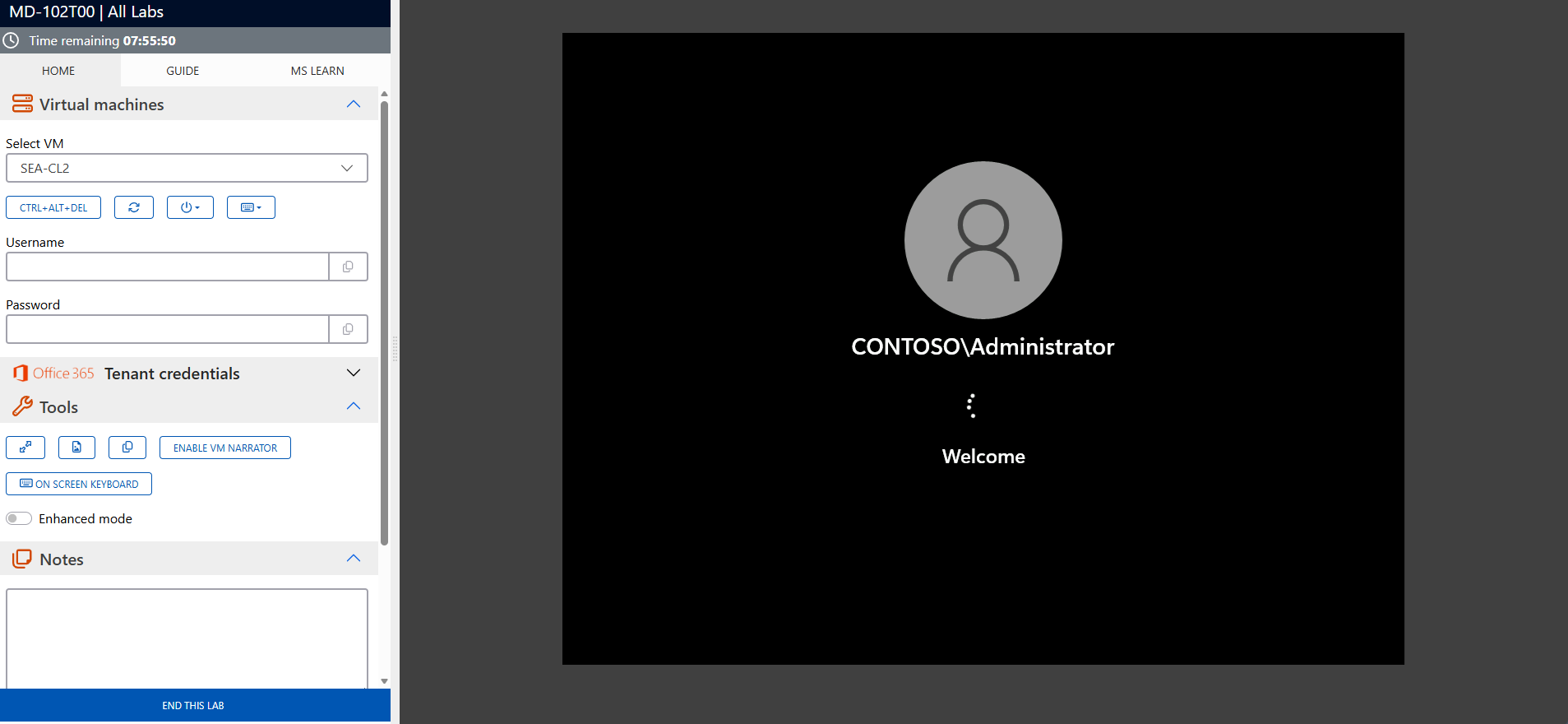
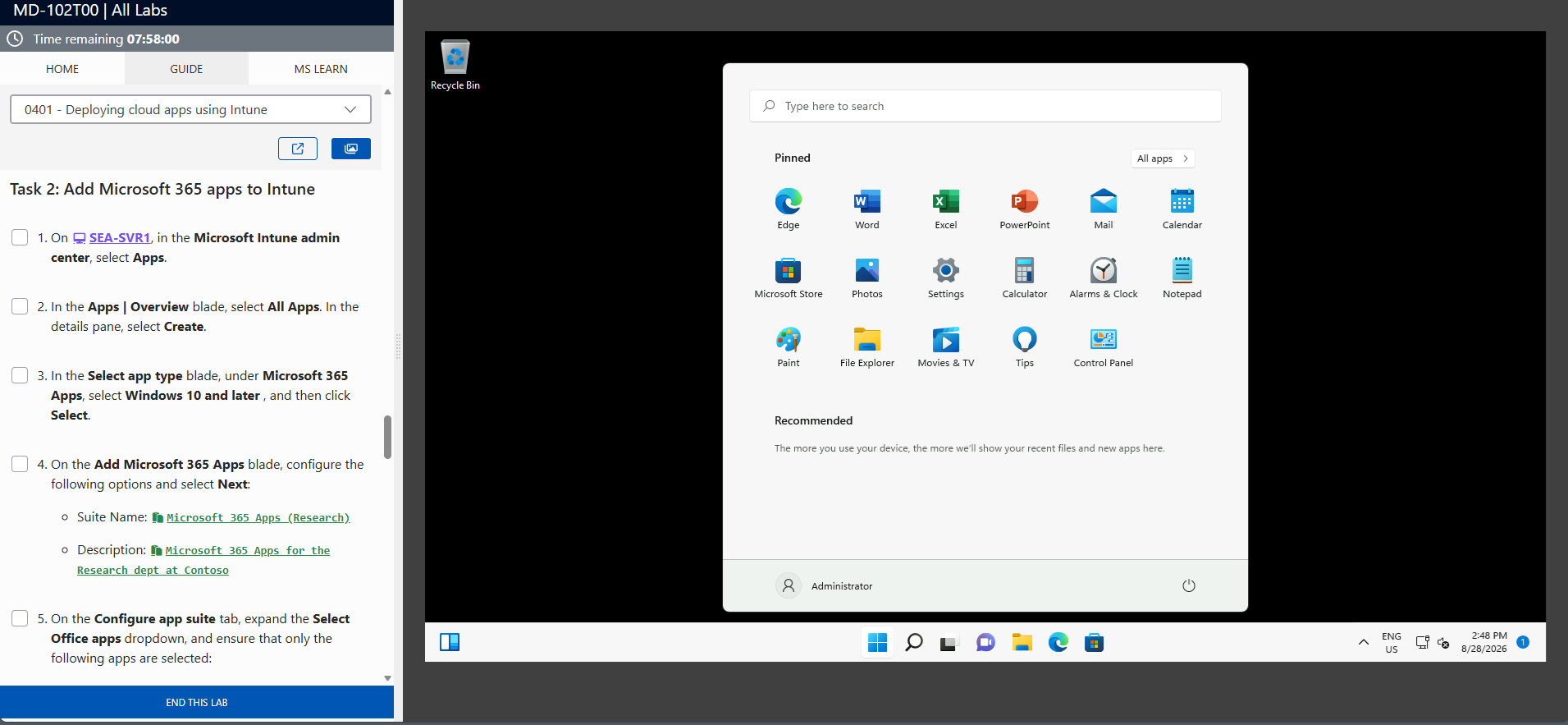
The screenshots above are provided as examples and may vary depending on the lab version and updates.
Who Should Attend?
This training is ideal for:
- Security operations analysts seeking to enhance their skills in managing Microsoft security solutions
- IT professionals responsible for incident detection and response
- SOC team members aiming to improve their threat detection and response capabilities
- Professionals preparing for the Microsoft Certified: Security Operations Analyst Associate (SC-200) certification
Strengthen Your Security Operations with Microsoft Expertise
The Microsoft Certified: Security Operations Analyst Associate (SC-200) training provides the tools and skills to effectively manage security operations. Enroll today to earn a globally recognized certification and advance your career in cybersecurity.
SC-200 Exam Success Strategies
Mastering the SC-200 certification requires more than technical knowledge – strategic preparation, effective time management, and optimal mental performance are equally crucial for success.
SC-200 Exam Statistics & Success Rates
- Average Pass Rate: 65-70% on first attempt (Microsoft Associate level average)
- Most Common Score Range: 720-780 for passing candidates
- Average Study Time: 6-8 weeks for experienced IT professionals
- Retake Rate: 25-30% of candidates require a second attempt
- Top Failure Areas: KQL query writing and log analysis (38%), Microsoft Sentinel analytics rules and automation (34%), threat hunting and investigation techniques (31%)
Study Method Comparison
| Study Approach | Duration | Pass rate | Best For |
|---|---|---|---|
|
Hands-on Practice Only |
4-5 weeks |
45-55% |
Experienced SOC analysts |
|
Documentation + Practice |
6-7 weeks |
70-75% |
Methodical learners |
|
Training + Labs + Practice |
6-8 weeks |
85-90% |
Comprehensive preparation |
|
Practice Tests Only |
2-3 weeks |
35-45% |
Not recommended |
Strategic Study Approach
- Create a 6-8 week study timeline – Don’t cram for this associate-level certification
- Follow the 70-20-10 rule – 70% hands-on practice with Microsoft Sentinel, Defender XDR, and KQL, 20% reading documentation, 10% practice tests
- Focus on scenario-based learning – SC-200 emphasizes real-world threat detection and incident response over memorization
- Study in 90-minute focused blocks with 15-minute breaks to maximize retention
Common Exam Pitfalls to Avoid
- Don’t confuse Microsoft security tools – understand the distinct roles of Sentinel, Defender XDR, Defender for Cloud, and Defender for Endpoint
- KQL query syntax and operators – know how to write efficient queries using summarize, join, union, and advanced operators
- Analytics rules vs. hunting queries – distinguish between scheduled analytics rules, near-real-time rules, and proactive threat hunting
- Incident response workflows – understand triage, investigation, remediation, and post-incident activities
- Data connector configuration – know how to properly configure and troubleshoot data sources in Microsoft Sentinel
- Automation and orchestration confusion – understand playbooks, automation rules, and SOAR capabilities in Sentinel
Topic Weight Distribution
| Exam Domain | Weight | Focus Areas | Priority |
|---|---|---|---|
|
Mitigate Threats Using Microsoft Defender XDR |
25-30% |
Defender for Endpoint, Identity, Office 365, Cloud Apps |
Critical |
|
Mitigate Threats Using Microsoft Defender for Cloud |
15-20% |
Cloud security posture, workload protection |
High |
|
Mitigate Threats Using Microsoft Sentinel |
50-55% |
KQL, analytics rules, workbooks, threat hunting, automation |
Critical |
Exam Day Time Management
- Allocate 90 seconds per question on average – this gives buffer time for complex scenarios
- Read case studies completely first before attempting related questions
- Flag uncertain questions and return to them – don’t get stuck on difficult items
- Reserve 15 minutes at the end for reviewing flagged questions and checking answers
Managing Exam Stress & Performance
- Get 7-8 hours of quality sleep the night before – avoid last-minute cramming
- Arrive 30 minutes early to settle in and complete check-in procedures calmly
- Use deep breathing techniques if you feel overwhelmed during the exam
- Trust your preparation – your first instinct is usually correct on scenario questions
Technical Preparation Tips
- Practice writing KQL queries extensively – master log analysis, aggregation, and correlation techniques
- Master Microsoft Sentinel configuration – know how to set up workspaces, data connectors, and analytics rules
- Understand threat hunting methodologies – learn proactive hunting techniques using hunting queries and notebooks
- Review incident response procedures – understand how to investigate, contain, and remediate security incidents
Final Week Preparation
- Take 2-3 practice exams to identify knowledge gaps and build confidence
- Review Microsoft’s official exam objectives one final time
- Avoid learning new concepts – focus on reinforcing what you already know
- Prepare your exam day logistics – route to test center, required identification, arrival time
Mental Preparation Strategies
- Visualize success scenarios – imagine yourself confidently answering questions
- Remind yourself of your hands-on experience – you’ve likely investigated many security incidents before
- Stay positive during difficult questions – every candidate faces challenging scenarios
- Remember that 700/1000 passes – you don’t need perfection, just solid competency
How to Schedule Your SC-200 Exam
- Official Testing Provider: Pearson VUE is Microsoft’s authorized testing partner for SC-200
- Scheduling Process: Create a Pearson VUE account, search for “SC-200”, select your preferred test center and date
- Exam Cost: Included with your Eccentrix training – exam voucher provided for this associate-level certification
- Scheduling Timeline: Book at least 2-3 weeks in advance for better time slot availability
- Rescheduling Policy: Free rescheduling up to 24 hours before your exam appointment
- Required ID: Government-issued photo ID (passport, driver’s license) matching your registration name exactly
Success Mindset: Approach SC-200 as a validation of your existing security operations analyst skills rather than a test of memorized facts. Your practical experience with threat detection, KQL query writing, and incident response is your greatest asset.
Frequently asked questions
What topics are covered in the SC-200 training?
The course includes Microsoft Sentinel, Microsoft Defender, Azure Security Center, and SOC operations best practices.
Who is this training designed for?
It is designed for security analysts, SOC team members, and IT professionals working in security operations.
What are the prerequisites for this training?
A basic understanding of security concepts and experience with Microsoft technologies is recommended.
Does this training include hands-on exercises?
Yes, participants will work on practical scenarios to apply the concepts learned.
What tools and technologies are covered?
You will learn how to use Microsoft Sentinel, Microsoft Defender, and Azure Security Center for threat detection and response.
How does the SC-200 certification benefit my career?
The certification validates your skills in managing Microsoft security solutions, enhancing your career prospects in cybersecurity.
Can I take the SC-200 training remotely, and are there any financing or discount options?
Yes, the SC-200 course is available as a live, interactive virtual class via Microsoft Teams. Eccentrix also offers discounts for public, education, and health sectors, as well as flexible solutions to optimize your training investment.
What types of practical labs are included in the SC-200 training?
The SC-200 course includes technical labs that simulate real-world security operations scenarios. These exercises allow participants to practice threat detection and response in a secure environment, reinforcing learning through hands-on experience.